
Soil · Sold by the yard
¼″ Screened Compost in Wrentham, MA
Fine screened compost (¼″) for top-dressing lawns, feeding garden beds and improving tired soil. Sold by the yard.
In short: Screened compost is fine, dark organic matter that feeds soil. Top-dress lawns about ¼ inch, or work 1 to 2 inches into beds; 500 square feet at 1 inch is about 1.5 yards.
Get a priceScreened compost is the easiest way to improve almost any soil. We screen it to a quarter inch, so it is fine, dark and crumbly. As a result, it spreads thin over a lawn or mixes easily into a garden bed.
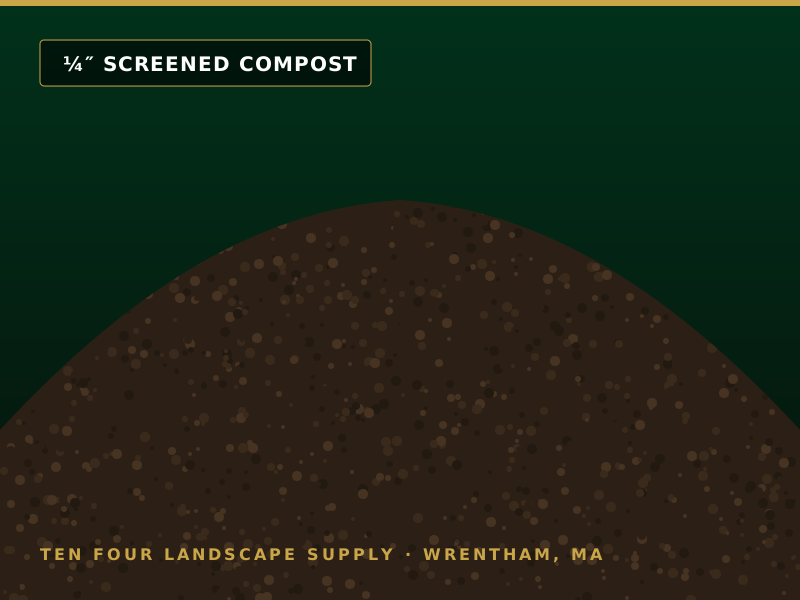
What is ¼″ screened compost?
Compost is organic material that has broken down into a rich, soil-like product. It adds organic matter, which helps sandy soil hold water and helps heavy soil drain.
Screening to a quarter inch removes chunks, so the compost is fine enough for top-dressing. In other words, it filters down between grass blades instead of sitting on top.
Compost is not a replacement for topsoil. Instead, it is an amendment. You add it to existing soil or blend it with loam, and it makes that soil work better.
Ways to use screened compost
Here are the most common uses:
- Top-dressing lawns after aeration
- Mixing into vegetable and flower beds
- Blending with loam for raised beds
- Amending planting holes for shrubs and trees
- Improving sandy or heavy clay soil
- Refreshing tired beds each spring
How much screened compost do I need?
First, measure the length and width of the area in feet and multiply them to get square feet. Then multiply by the depth in inches and divide by 324. The answer is cubic yards, which is how the yard sells screened compost. On a lawn, screened compost goes on about a quarter inch thick. In beds, on the other hand, work 1 to 2 inches into the top few inches of soil.
| Area | At 1″ deep | At 2″ deep |
|---|---|---|
| 100 sq ft | 0.3 yd | 0.6 yd |
| 250 sq ft | 0.8 yd | 1.5 yd |
| 500 sq ft | 1.5 yd | 3 yd |
| 1,000 sq ft | 3 yd | 6 yd |
| 2,000 sq ft | 6 yd | 12.5 yd |
For example, a 20 by 25 foot area is 500 square feet. At 1 inches deep, that works out to about 1.5 yards. In practice, we suggest rounding up by half a yard, because edges, low spots and settling always take a little extra. Still, if the math feels off, call (774) 372-1050 and we will work it out with you before the truck is loaded.
Delivery or pickup at the yard
There are two ways to get this material from us. First, we can deliver it. Our trucks drop residential and commercial loads across Wrentham, Norfolk, Franklin, Foxborough, Plainville, Medway and Bellingham. Tell us exactly where you want the pile, and the driver will place it as close to that spot as the ground safely allows.
Second, you can pick it up yourself. Bring a pickup truck, dump truck or trailer to 26 Industrial Rd in Wrentham during yard hours, and we will load you from the bays with the loader. As a rule of thumb, a full-size pickup carries about 2 to 3 yards safely. So check your payload rating before you come, and bring a tarp for the ride home.
Getting ready for a delivery
- Pick the spot. Choose a flat, open place close to where you will spread the material. A driveway apron or the edge of the lawn works well.
- Check the clearance. Our trucks need room overhead and a firm surface. So look up for wires and branches, and keep the drop zone clear of cars.
- Protect the surface. If the pile goes on pavement, lay down a tarp or plywood first. As a result, cleanup takes minutes instead of an afternoon.
- Tell us about access. Mention gates, soft ground, septic covers or tight turns when you order. Then the driver can plan the approach before arriving.
- Plan the spread. Finally, line up a wheelbarrow, rake and a helper. Most people spread a few yards in a morning.
How to top-dress a lawn with screened compost
- Mow and aerate. Mow a little shorter than usual and core-aerate. Then the compost can drop into the holes.
- Spread thin. Shovel small piles across the lawn and spread them with the back of a rake. Next, aim for about a quarter inch.
- Work it in. Drag a rake or a mat so the compost settles between the grass blades. As a result, the grass stays visible.
- Overseed. This is a great time to overseed, because the seed lands in rich material.
- Water well. Finally, water deeply to settle everything into the soil.
For vegetable gardens, spread an inch or two of screened compost each spring and turn it into the top few inches of soil. Over a few seasons, the soil darkens, holds moisture better and becomes easier to dig. In fact, many gardeners say compost is the single best thing they add.
Compost also helps new plantings settle in. When you plant a shrub or tree, mix some screened compost with the soil you put back in the hole. However, do not fill the hole with pure compost, because roots grow better when the soil changes gradually. For more guidance on soil health, the UMass Extension home lawn and garden program has helpful fact sheets.
Lawns benefit from compost year after year, not just once. A light annual top-dressing slowly builds the organic matter in the root zone, and as a result the grass handles heat and dry spells better. Also, healthier soil means fewer bare patches for weeds to take over. Many homeowners pair it with fall aeration as a simple yearly routine.
Why screened soil products matter
Screening removes rocks, roots and clumps, so what arrives is loose and easy to spread. As a result, it rakes smooth, seeds evenly and mixes into existing soil without a fight. Unscreened material, by contrast, leaves you picking stones out by hand for days.
Screened material also settles more evenly. That matters on a new lawn, because low spots show up as puddles and thin grass later. So it is worth buying the right product at the start rather than fixing the grade twice.
Best time to spread soil and compost
Late summer into early fall is the best time for new lawns in Massachusetts. Warm soil and cooler nights help seed sprout quickly, and in addition there is less weed pressure than in spring. Spring works too, especially for garden beds. Just avoid spreading soil when it is soaking wet, because wet soil compacts under boots and wheelbarrows.
Storing leftover material
Leftover soil or compost should be covered with a tarp, since rain washes out fines and wind blows in weed seeds. In addition, try to use it within a few weeks while it is still loose. After that, it can crust on top, although it breaks up again with a rake. Many people keep a little on hand for filling low spots and patching bare lawn.
Contractor and commercial orders
Landscapers, builders, excavation crews and property managers buy from the yard every week. For that reason, we keep the loader running early, so contractor trucks can load and get to the job before the day heats up. In addition, we can stage repeat deliveries to a site when a project runs over several days.
If you manage condos, office parks or HOA grounds, ask about planning spring and fall deliveries in advance. That way, the material lands when your crew is ready, instead of sitting in a parking lot. Likewise, excavation contractors can combine stone, sand and loam on one schedule, which keeps a site moving.
What to tell us when you order
A quick call goes faster when you have a few details ready. That way, we can quote the load and book the truck in one conversation.
- First, the material and how many yards you need
- Next, the delivery address and town
- Also, where the pile should go and any tight access
- Then, the best day and a backup day for delivery
- Finally, a phone number the driver can call on the way
Why buy screened compost from Ten Four Landscape Supply
Ten Four Landscape Supply is a local bulk-materials yard owned by Seth Dias. In other words, you are buying from the same people who load the truck, not from a call center. We sell every material by the yard, so you pay for what you need rather than for bags and plastic.
- Sold by the yard, loaded or delivered from 26 Industrial Rd, Wrentham
- Residential and commercial orders, from a single yard to full truckloads
- Straight answers on how much to order, so you do not buy twice
- Delivery across seven nearby towns, plus pickup during yard hours
- Other bulk materials on site, so one trip can cover a whole project
Also, because the yard handles mulch, stone, loam, compost and sand in one place, contractors can mix a load plan for a job in one call. Homeowners, meanwhile, get the same material the pros use, measured the same way.
Where we deliver screened compost
We deliver screened compost to homes, contractors and property managers in Wrentham, Norfolk, Franklin, Foxborough, Plainville, Medway and Bellingham, Massachusetts. Gardeners in Medway, Norfolk and Wrentham often pick up screened compost by the yard every spring. Not sure your street is in range? Check the towns we serve, or just call and ask.
Pairs well with
Screened compost pairs naturally with other soil work. For example, loam builds the bed, compost enriches it, and mulch covers it to hold moisture.
 ½″ Screened LoamScreened topsoil for new lawns, grading and garden beds.
 Pure Hemlock MulchNatural reddish-brown hemlock bark. Fine texture, no dye.
 Black MulchDyed black bark mulch for beds and borders. Holds color through the season.
Screened compost FAQs
What is screened compost?
Finished compost screened to a quarter inch, so it is fine and easy to spread.
How much screened compost for top-dressing a lawn?
About 1 yard covers roughly 1,300 square feet at a quarter inch.
Can I plant directly in screened compost?
It is best blended with soil. A mix of two parts loam to one part compost works well.
When should I top-dress with compost?
Early fall is ideal, especially with aeration and overseeding. Spring works too.
Does screened compost smell?
Finished compost has an earthy smell, similar to forest soil. It is not like fresh manure.
Is screened compost good for vegetable gardens?
Yes. Working it in each spring builds healthier soil over time.
Can I use screened compost as mulch?
A thin layer around vegetables works. However, bark mulch is better for weed control in ornamental beds.
Do you deliver screened compost?
Yes, to Wrentham, Norfolk, Franklin, Foxborough, Plainville, Medway and Bellingham.
How much screened compost for a raised bed?
Figure the bed volume in yards, then plan about one third of it as compost and two thirds as loam.
Will screened compost burn grass?
No. Finished compost is gentle, unlike fresh manure or heavy fertilizer.
Have a question that is not listed here? For more background on soils, mulching and plant care in our region, the UMass Extension Landscape, Nursery & Urban Forestry Program publishes practical fact sheets. Otherwise, call the yard at (774) 372-1050 and we will help you choose.
Order ¼″ Screened Compost
First, tell us how many yards and the delivery town. Then we confirm the price and a delivery window, or else we have your load ready for pickup at the yard.