
Stone · Sold by the yard
New England Field Stone in Wrentham, MA
Weathered New England field stone for walls, borders, steps and accents. Real, local character for any landscape.
In short: New England field stone is weathered, irregular stone for walls, borders and accents. Order by the job: tell us the wall length and height, and we will help size the load.
Get a priceNew England field stone is the stone our region is famous for. Farmers pulled it from fields for centuries and stacked it into the walls that still line local roads. Today, the same weathered field stone gives new landscapes that settled, timeless look.
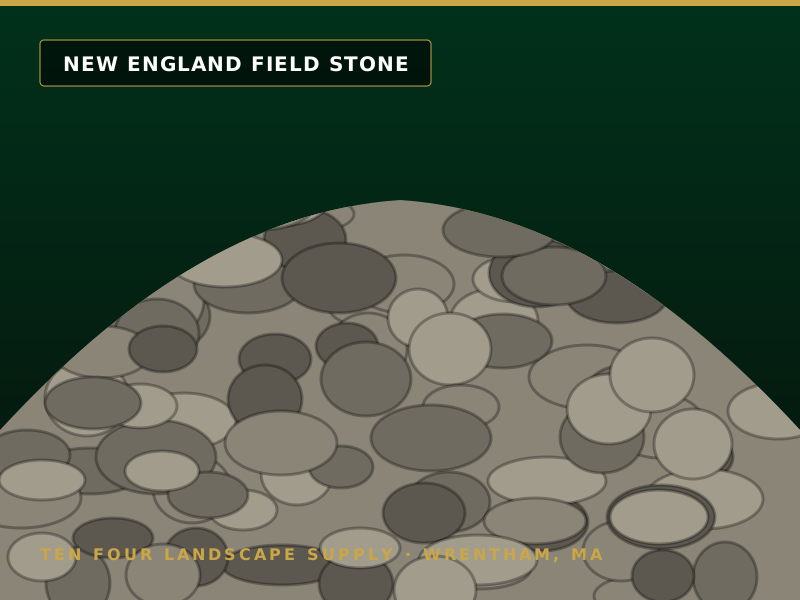
What is New England field stone?
Field stone is naturally rounded and irregular, with soft edges from years of weather and frost. The colors run from gray and tan to brown with lichen tones, so every piece is a little different.
Because it is not cut, field stone suits informal designs. For example, it makes dry-laid garden walls, bed borders, stepping pieces and accent boulders. As a result, it blends into yards that border woods and older homes especially well.
Sizes vary within a load. So when you order, tell us what you are building, and we will help you choose the right amount of wall stone versus smaller filler pieces.
Popular uses for field stone
Here is what people build most often with it:
- Low dry-laid garden and boundary walls
- Borders around beds and tree rings
- Informal steps set into a slope
- Accent stones and small boulder groupings
- Edging along wood chip and stone paths
- Fire pit surrounds and seating walls
How much field stone do I need?
First, measure the length and width of the area in feet and multiply them to get square feet. Then multiply by the depth in inches and divide by 324. The answer is cubic yards, which is how the yard sells field stone. Field stone is not spread like mulch, so the depth columns below are only a rough guide for a stone border. For walls, instead, tell us the length and height, and we will estimate the load.
| Area | At 4″ deep | At 6″ deep |
|---|---|---|
| 100 sq ft | 1 yd | 2 yd |
| 250 sq ft | 3 yd | 4.5 yd |
| 500 sq ft | 6 yd | 9.5 yd |
| 1,000 sq ft | 12.5 yd | 18.5 yd |
| 2,000 sq ft | 24.5 yd | 37 yd |
For example, a 20 by 25 foot area is 500 square feet. At 4 inches deep, that works out to about 6 yards. In practice, we suggest rounding up by half a yard, because edges, low spots and settling always take a little extra. Still, if the math feels off, call (774) 372-1050 and we will work it out with you before the truck is loaded.
Delivery or pickup at the yard
There are two ways to get this material from us. First, we can deliver it. Our trucks drop residential and commercial loads across Wrentham, Norfolk, Franklin, Foxborough, Plainville, Medway and Bellingham. Tell us exactly where you want the pile, and the driver will place it as close to that spot as the ground safely allows.
Second, you can pick it up yourself. Bring a pickup truck, dump truck or trailer to 26 Industrial Rd in Wrentham during yard hours, and we will load you from the bays with the loader. As a rule of thumb, a full-size pickup carries about less than a yard safely. So check your payload rating before you come, and bring a tarp for the ride home.
Getting ready for a delivery
- Pick the spot. Choose a flat, open place close to where you will spread the material. A driveway apron or the edge of the lawn works well.
- Check the clearance. Our trucks need room overhead and a firm surface. So look up for wires and branches, and keep the drop zone clear of cars.
- Protect the surface. If the pile goes on pavement, lay down a tarp or plywood first. As a result, cleanup takes minutes instead of an afternoon.
- Tell us about access. Mention gates, soft ground, septic covers or tight turns when you order. Then the driver can plan the approach before arriving.
- Plan the spread. Finally, line up a wheelbarrow, rake and a helper. Most people spread a few yards in a morning.
How to build a low field stone wall
- Dig a trench. Dig a shallow trench a few inches deep along the wall line. Then fill it with crushed stone for drainage.
- Set the base stones. Place the largest, flattest pieces first. As a result, the whole wall sits on a solid footing.
- Lean it back. Stack each course slightly back toward the uphill side. That lean keeps the wall stable over time.
- Cross the joints. Set every stone over the joint below, just like bricks. Next, pack small stones into the gaps.
- Cap it. Finally, choose flatter stones for the top course so the wall looks finished and sheds water.
Keep dry-laid walls low, generally under a few feet, unless a professional designs them. Taller retaining walls hold back a lot of soil, so they need engineering, drainage and proper footings. In other words, field stone is perfect for garden-scale walls, and bigger jobs deserve a contractor.
Field stone also works as a simple border that needs no mortar at all. Just set a single row of stones into the soil around a bed. Over time, mulch settles against them and the edge looks like it has always been there. Likewise, a few larger stones placed in a group make an easy, natural focal point near an entry.
Crushed stone, fines and compaction
Crushed stone behaves differently from rounded gravel. Because each piece has flat, broken faces, the stones wedge against one another when they are compacted. As a result, a crushed stone surface stays firm, while rounded stone tends to roll and shift.
Screened stone also has a consistent size. That matters for drainage, since uniform pieces leave open gaps for water. On the other hand, a surface that needs to pack very hard often gets a finer stone or a dense base on top. So tell us whether drainage or a hard surface matters more, and we will point you to the right size.
Stone weight and trucking
Stone is much heavier than mulch. A yard of crushed stone typically weighs well over a ton, depending on size and moisture. For that reason, pickup loads are smaller, and most driveway or drainage jobs are easier with delivery. Also, keep delivery trucks off septic fields, soft lawns and thin pavement.
Storing leftover material
Extra stone never goes bad. So many people keep a small pile behind the garage for patching ruts, filling washouts and topping up drip edges. That said, keep it off the lawn, because the weight flattens grass quickly. A few extra yards also come in handy after winter, when plows and melting snow shift stone around.
Contractor and commercial orders
Landscapers, builders, excavation crews and property managers buy from the yard every week. For that reason, we keep the loader running early, so contractor trucks can load and get to the job before the day heats up. In addition, we can stage repeat deliveries to a site when a project runs over several days.
If you manage condos, office parks or HOA grounds, ask about planning spring and fall deliveries in advance. That way, the material lands when your crew is ready, instead of sitting in a parking lot. Likewise, excavation contractors can combine stone, sand and loam on one schedule, which keeps a site moving.
What to tell us when you order
A quick call goes faster when you have a few details ready. That way, we can quote the load and book the truck in one conversation.
- First, the material and how many yards you need
- Next, the delivery address and town
- Also, where the pile should go and any tight access
- Then, the best day and a backup day for delivery
- Finally, a phone number the driver can call on the way
Why buy field stone from Ten Four Landscape Supply
Ten Four Landscape Supply is a local bulk-materials yard owned by Seth Dias. In other words, you are buying from the same people who load the truck, not from a call center. We sell every material by the yard, so you pay for what you need rather than for bags and plastic.
- Sold by the yard, loaded or delivered from 26 Industrial Rd, Wrentham
- Residential and commercial orders, from a single yard to full truckloads
- Straight answers on how much to order, so you do not buy twice
- Delivery across seven nearby towns, plus pickup during yard hours
- Other bulk materials on site, so one trip can cover a whole project
Also, because the yard handles mulch, stone, loam, compost and sand in one place, contractors can mix a load plan for a job in one call. Homeowners, meanwhile, get the same material the pros use, measured the same way.
Where we deliver field stone
We deliver field stone to homes, contractors and property managers in Wrentham, Norfolk, Franklin, Foxborough, Plainville, Medway and Bellingham, Massachusetts. Field stone is a natural match for the older homes and wooded lots common in Norfolk, Medway and Wrentham. Not sure your street is in range? Check the towns we serve, or just call and ask.
Pairs well with
Field stone frames other materials beautifully. For instance, it edges a wood chip path or a hemlock-mulched bed. Meanwhile, crushed stone makes the drainage base under a wall.
 Natural Wood ChipsUndyed chipped wood for paths, natural areas and wide beds.
 Pure Hemlock MulchNatural reddish-brown hemlock bark. Fine texture, no dye.
 ¾″ BluestoneCrushed bluestone for driveways, drainage and base layers.
Field stone FAQs
What is New England field stone?
It is weathered, naturally rounded stone gathered locally, the same kind used in old farm walls.
How much field stone do I need for a wall?
It depends on length, height and width. Tell us the dimensions and we will help estimate the load.
Can I build a field stone wall myself?
Low garden walls are a great DIY project. Taller retaining walls, however, should be built by a professional.
Does a field stone wall need mortar?
No. Most field stone walls are dry-laid, which lets water drain and lets the wall flex with frost.
How heavy is field stone?
Stone is very heavy, so pickup loads are small. For walls, delivery is usually the easier option.
Can field stone be used for steps?
Yes. Larger, flatter pieces make informal steps set into a slope with compacted stone underneath.
Is field stone good for a fire pit?
It makes an attractive surround. Still, line the inside with a steel ring or fire brick to protect the stone from direct heat.
Do you deliver field stone?
Yes, to Wrentham, Norfolk, Franklin, Foxborough, Plainville, Medway and Bellingham.
What color is field stone?
Mostly grays, tans and browns with natural weathering. Every piece is a little different.
Can I pick out field stone at the yard?
Call ahead and we will let you know what is on hand and how pickup works for your project.
Have a question that is not listed here? For more background on soils, mulching and plant care in our region, the UMass Extension Landscape, Nursery & Urban Forestry Program publishes practical fact sheets. Otherwise, call the yard at (774) 372-1050 and we will help you choose.
Order New England Field Stone
First, tell us how many yards and the delivery town. Then we confirm the price and a delivery window, or else we have your load ready for pickup at the yard.