

For first responder families. You carry it too.
Spouses, partners, parents and kids live with the job as well. This page is for first responder families: what to expect after a hard call, what helps, what does not, and how to reach us yourself. Because yes, you can call (781) 983-4565 too.
What to expect
What first responder families often notice after a bad call
Most responders do not come home and announce that something went wrong. Instead, first responder families usually see it in behavior. For example, they may be quieter than usual, short-tempered over small things, or glued to a screen. Sleep may be off for a few nights. Appetite may change. Some people need to be busy, while others need to be left alone.
Most of these reactions are normal, and most fade within days or a few weeks. However, if they last longer than a month, get worse, or include talk of hopelessness or heavy drinking, it is time to reach out. You do not have to wait for your responder to agree.

Things you can say
- “I’m here when you want to talk, and I’m here if you don’t.”
- “You don’t have to protect me from it.”
- “What would help tonight?”
- “I noticed you haven’t been sleeping. Can we talk about it?”
And one to skip: “At least it wasn’t worse.” It never lands.
What helps
Six things that help first responder families
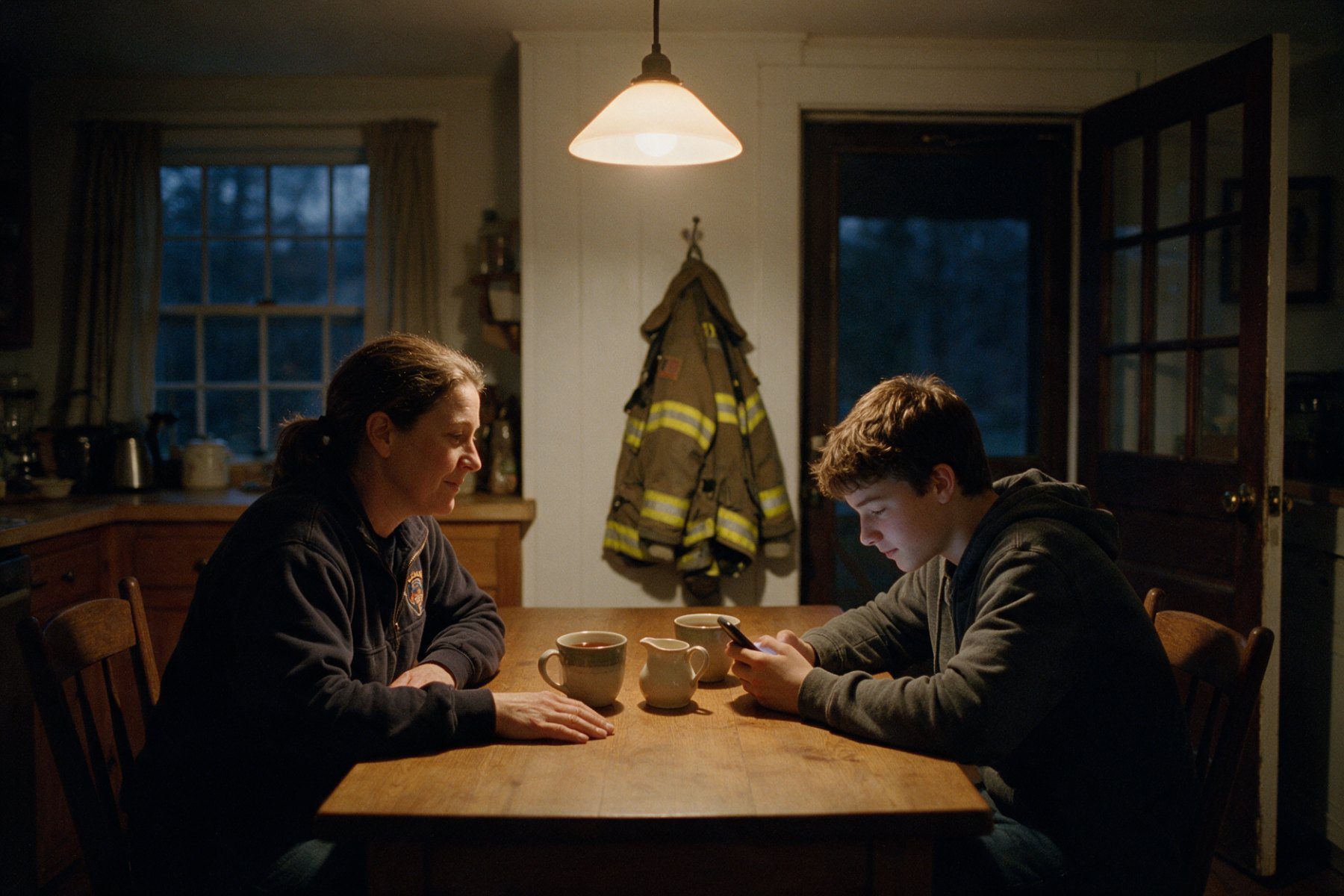
Kids & teens
Talking with children in first responder families
Children pick up on tension faster than adults expect. Therefore, keep it simple and honest at their level: “Dad had a hard day at work and he’s a little sad. It’s not about you.” Keep routines, keep bedtimes, and keep the news off when the incident is on it.
Teenagers may act like they do not care and then ask a pointed question at 11 p.m. Answer it. In addition, let the school know if a parent was involved in a high-profile event, so teachers can watch for changes.
Resources for first responder families
- 988 Suicide & Crisis Lifeline — call or text 988, for you or for them.
- Safe Call Now (1-206-459-3020) — staffed by responders, open to family members.
- Family & significant-other sessions — ask us to run one for your department’s families.
Request assistance
Worried about someone you love? You can call us.
First responder families reach our line every week. We will listen, answer questions and, if you want, help you plan the conversation.
24 hours a day · 7 days a week · Peer-to-peer