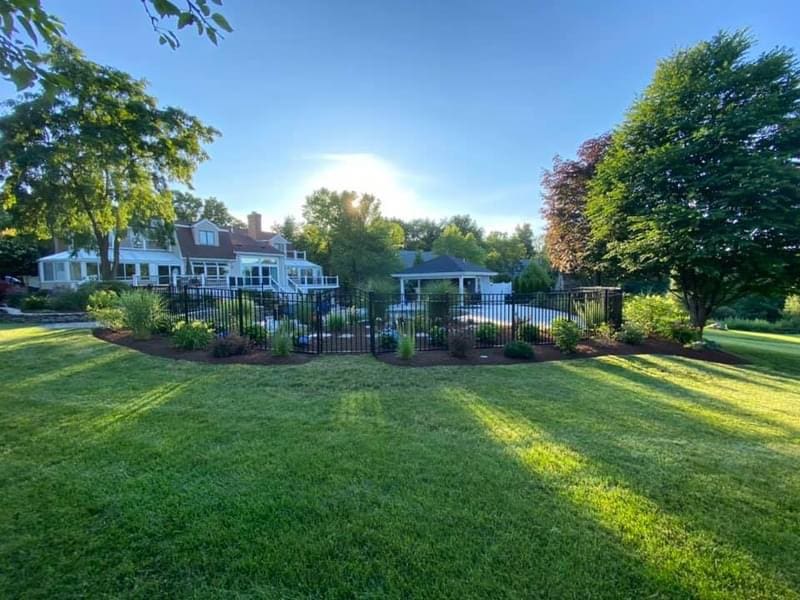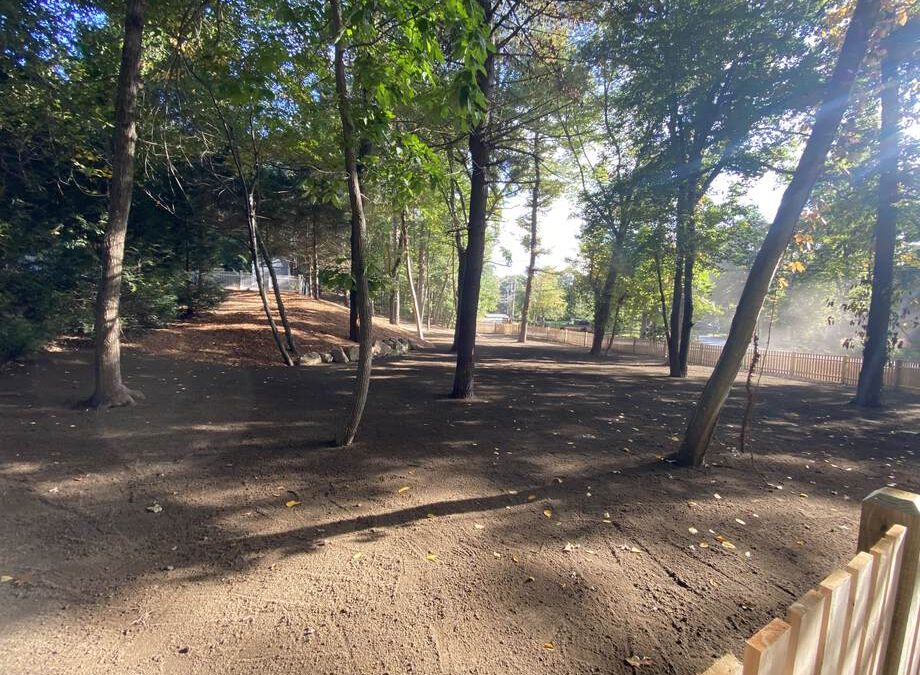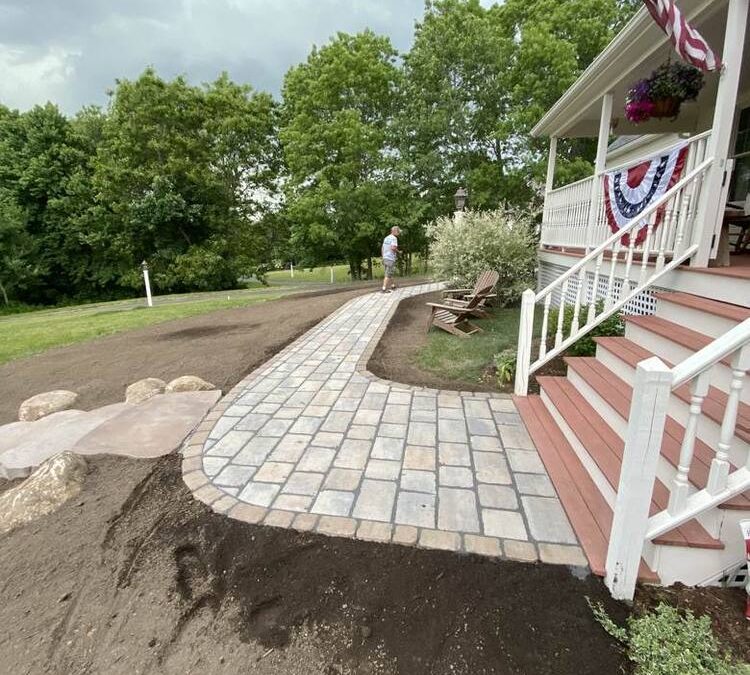
Hydroseeding vs sod comes down to time versus money. Sod gives you a finished lawn in a day for about $1.50 to $3.00 per square foot installed, while hydroseeding costs roughly $0.15 to $0.40 per square foot and takes 6 to 10 weeks to fill in. For most Norfolk County yards over 3,000 square feet, hydroseeding is the better value. However, sod wins on steep slopes, small front yards and anywhere you need a usable lawn right away.
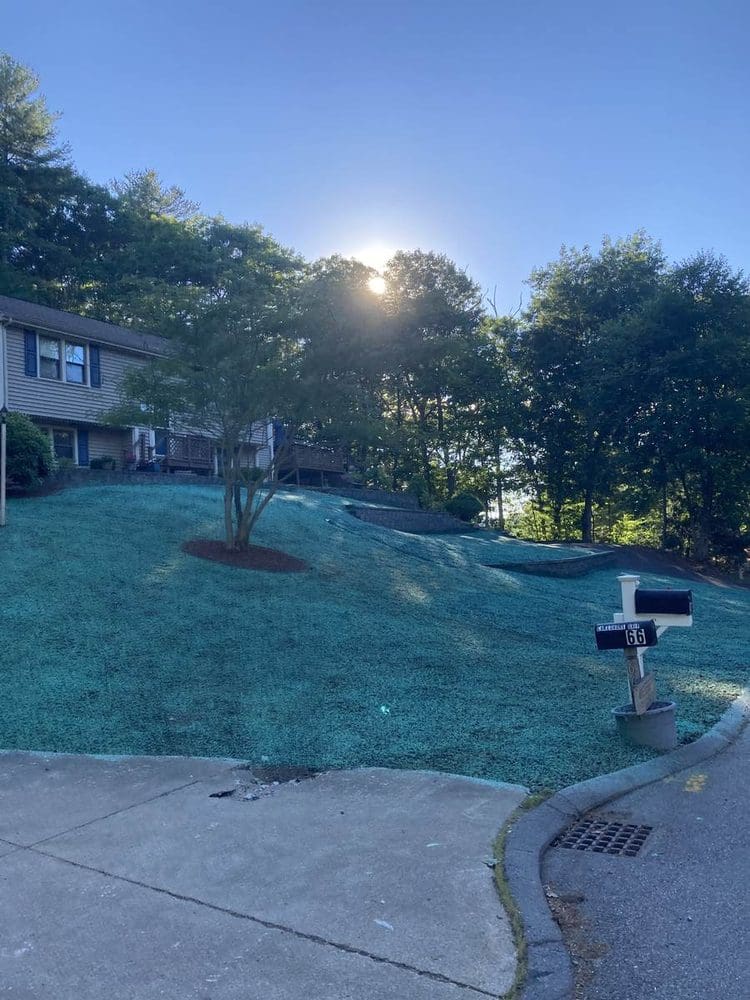
Hydroseeding vs sod: cost per square foot in Norfolk County
Price is the first thing most homeowners in Wrentham and Franklin ask about, so let’s start there. The numbers below are typical installed ranges for our area. They include soil prep on a normal lot but not major grading or fill.
| Method | Cost per sq. ft. | 5,000 sq. ft. lawn | 10,000 sq. ft. lawn |
|---|---|---|---|
| Hydroseeding | $0.15–$0.40 | $750–$2,000 | $1,500–$4,000 |
| Sod (installed) | $1.50–$3.00 | $7,500–$15,000 | $15,000–$30,000 |
So on a half-acre lot, sod can cost ten times what hydroseed costs. That gap is the whole reason the hydroseeding vs sod question gets searched so often. In addition, sod prices in Massachusetts have climbed, because most rolls come from farms in the Connecticut Valley or Rhode Island.
What is included in a hydroseeding price
A hydroseed quote covers the slurry itself: seed, mulch fiber, tackifier and starter fertilizer, sprayed from a tank truck. It also includes final grading and a light rake. What it usually does not include is loam. If your lot is raw fill, budget another $0.50 to $1.00 per square foot for screened loam spread 4 to 6 inches deep.
What is included in a sod price
A sod quote covers the rolls, delivery, laying, rolling and starter fertilizer. Sod also needs loam and a smooth, firm base, because bumps show immediately. So the prep line is often the same for both, and material and labor are what push sod up.
Hydroseeding vs sod: how fast will you have a lawn?
This is where sod earns its price.
- Sod: Green the day it is laid. Roots knit in 2 to 3 weeks. Light foot traffic after 3 weeks, normal use after 5 to 6 weeks.
- Hydroseed: Sprouts in 7 to 14 days. Looks like a lawn at 4 to 6 weeks. First mow around week 4 or 5. Ready for kids and dogs at 8 to 12 weeks.
For example, a Foxboro family closing on a new build in early May can have a hydroseeded lawn ready for a July 4th cookout. A family closing in August cannot, because summer seedings struggle. They should sod or wait for a September hydroseed. Timing, not just budget, should drive your hydroseeding vs sod decision.
Watering requirements for hydroseeding vs sod
Both methods live or die on water during the first month. However, the schedules differ. Sod needs heavy water right away to keep the rolls from shrinking. Hydroseed needs light, frequent water to keep the top inch damp without washing the slurry away.
Watering new sod
- Water within 30 minutes of laying, soaking through to the soil below.
- Days 1–10: water once or twice a day, about 1/4 inch each time. Lift a corner; the soil should be moist.
- Days 10–21: cut back to every other day, deeper.
- Week 4 and beyond: 1 to 1.5 inches per week, ideally in one or two deep soakings.
Watering hydroseed
- Days 1–14: light watering 2 to 3 times a day, 5 to 10 minutes per zone. Keep the mulch damp, never soggy.
- Days 14–28: once a day, slightly longer, as seedlings reach 2 inches.
- Weeks 4–8: every other day, deeper, to push roots down.
- After 8 weeks: 1 inch per week, same as an established lawn.
Either way, plan on running water for a month. Without irrigation, hydroseed is harder to keep damp on a hot week. Therefore, we often recommend sod for homeowners in Plainville or Bellingham who travel in summer.
Best seasons for a new lawn in New England
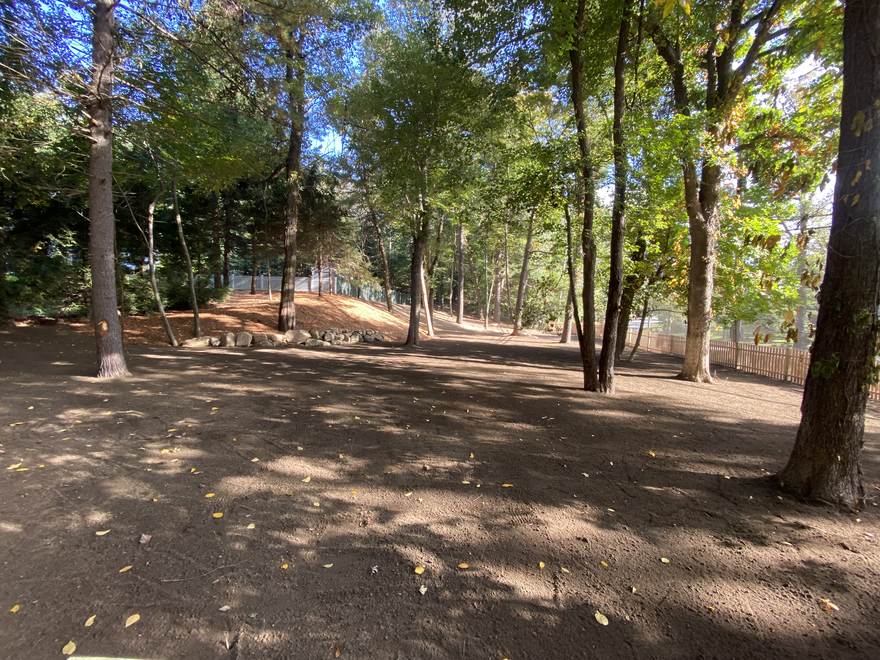
Massachusetts sits in the cool-season grass zone, where lawn grasses grow best in 50- to 65-degree soil. That gives us two windows, and one is clearly better for hydroseeding vs sod alike.
Late summer and early fall (best)
Late August through early October is prime time for both methods in Norfolk County. Soil is warm, nights are cooling, and weed pressure drops. In addition, fall rains do part of the watering for you. A September hydroseed in Wrentham usually looks better the following May than an April seeding does in June.
Spring (good, with caveats)
Mid-April through late May works, once the ground has thawed and dried. However, spring seedings face crabgrass, and you cannot use a standard pre-emergent on new seed. Sod handles spring better for that reason. Also, a wet May can delay the job by weeks.
Summer (avoid for seed)
Hydroseeding in July heat is a gamble, because seedlings dry out in hours. Sod can go in during summer if you commit to heavy watering, but it will stress. If you must have a lawn in July, sod is the only realistic option.
Seed blends that work in Norfolk County
The seed in the tank matters as much as the method. Cheap “contractor mix” is mostly annual rye and fades in a year. A good hydroseed blend for Wrentham, Norfolk and Franklin looks like this:
- Turf-type tall fescue (50–70%). Deep roots, drought tolerance and good wear. It handles our rocky glacial soils and dry Augusts better than anything else.
- Kentucky bluegrass (15–30%). Spreads by rhizomes, so it fills bare spots. Slower to germinate (14–21 days) but gives that dark, dense look.
- Perennial ryegrass (10–20%). Germinates in 5 to 7 days and holds soil while the others catch up.
- Fine fescue (optional). Added for shady yards under the oaks and pines common around Foxboro and Medway.
Sod in Massachusetts is almost always a Kentucky bluegrass blend. Bluegrass sod is beautiful, but it wants full sun and regular water. So if your yard is shady, a fescue-heavy hydroseed will outperform sod within two years. The UMass Extension landscape program publishes seed recommendations for Massachusetts if you want to go deeper.
Soil prep: the step that decides everything
The lawn is only as good as the 4 inches under it. Skipping prep to save money is the most common mistake in hydroseeding vs sod projects, and it costs more later. Here is what proper prep looks like here.
- Clear and rough grade. Remove debris, rocks over 2 inches, and old sod. Grade so water runs away from the house.
- Soil test. Norfolk County soils tend to be acidic, often pH 5.0 to 5.5. Grass wants 6.2 to 6.8, so lime is cheap insurance.
- Add loam. Spread 4 to 6 inches of screened loam over new construction or fill. On existing yards, 2 inches may be enough.
- Amend and till. Work in lime and starter fertilizer. Compost helps our sandy pockets hold water.
- Fine grade and firm. Rake smooth, then roll lightly. Footprints should sink about a half inch.
Our sitework crews handle grading and loam, and our hydroseeding truck follows within a day. That sequence matters, because a prepped lawn that sits for a week grows weeds first.
Slopes, erosion and drainage
Slopes change the hydroseeding vs sod answer. A grade up to about 3:1 (three feet across per foot of rise) is fine for hydroseed, because the mulch fiber and tackifier hold seed through normal rain. Steeper than that, and one thunderstorm can wash the slurry to the bottom.
Sod on a slope stays put if you stake it, but it can slide if it dries out before rooting. In addition, water runs off a slope before it soaks in, so both methods need shorter, more frequent watering there. For steep banks, we often use extra tackifier or an erosion blanket.
Low, wet spots are the other problem, since neither sod nor seed survives standing water. So if your yard in Norfolk or Medway ponds after a storm, fix the drainage first. Our water and drainage solutions page covers French drains, catch basins and regrading.
When sod wins
Sod is the right call more often than the price tag suggests. Choose sod when:
- You need a lawn now. A house closing, a party or a listing photo in three weeks.
- The area is small. Under 2,000 square feet, the cost gap shrinks to a few hundred dollars, and sod avoids weeks of mud.
- It is the front yard. Curb appeal on a busy road like Route 1A or Route 140 is worth the money.
- The timing is wrong for seed. Mid-summer, or late October when seed will not establish before frost.
- Kids and dogs cannot stay off it. Sod takes traffic in 3 weeks; hydroseed needs 8.
When hydroseeding wins
Hydroseeding is our default for most new lawns in the Wrentham area. Choose it when:
- Large areas. Over 4,000 square feet, the savings run into thousands of dollars.
- You can pick the blend. Shade, drought, dog traffic. Sod comes in one or two options; seed comes in dozens.
- Better long-term roots. Seed germinates in your soil, so roots go deep from day one. Sod roots must cross the seam between farm soil and yours.
- Fall installs. A September hydroseed matches sod by the following June at a fraction of the cost.
- New construction. Builders in Franklin and Bellingham use hydroseed almost exclusively.
Mistakes to avoid with either method
Most failed lawns we get called to fix share the same errors, whatever side of hydroseeding vs sod they started on.
- Underwatering in week one. The top inch dries out in hours on a windy day. Set a timer.
- Overwatering. Puddles wash seed and rot sod roots. Damp, not soaked.
- Mowing too early or too low. Wait until grass hits 3.5 inches, then take off no more than a third.
- Skipping lime. Acidic soil locks up fertilizer. A test costs $20.
- Buying cheap seed. Annual rye greens up fast and dies next summer.
- Applying crabgrass preventer. It stops your new grass seed too. Use a product labeled safe for seeding.
DIY or hire a pro?
Laying sod yourself is doable on a small, flat yard. Rolls weigh 30 to 40 pounds each, and a 2,000-square-foot lawn is about 200 rolls. However, you must lay it the day it arrives, because sod on a pallet in July heat cooks within 24 hours.
Hydroseeding is not a DIY job, because the tank truck and pump are not rental items. Homeowners can hand-seed small patches with a spreader and straw. For a whole yard, the even coverage from a hydroseed truck makes a visible difference. Our lawn installation team handles both sod and hydroseed, so you get an honest recommendation instead of a sales pitch for one method.
First-year care for your new lawn
The first year sets the lawn up for the next twenty. Here is the schedule we hand to clients across Norfolk County.
- Weeks 1–4: Water as described above. No mowing until 3.5 inches. Stay off it.
- Weeks 4–8: First mow at 3 inches with a sharp blade. Apply a second starter fertilizer at week 6.
- Weeks 8–12: Spot-seed thin areas and spot-treat broadleaf weeds.
- Month 3 onward: Switch to a regular fertilizer program with 4 to 5 applications per year.
- First fall: Core aerate and overseed to thicken the stand, especially on hydroseeded lawns.
- Late fall: Final mow at 2.5 inches, then winterizer fertilizer around Thanksgiving.
Expect a hydroseeded lawn to look 80 percent finished after the first fall and fully mature after the second spring. Sod looks finished immediately, but it needs the same fertilizer and aeration to stay dense. After year one, hydroseeding vs sod is hard to tell apart.
Frequently asked questions
Is hydroseeding cheaper than sod?
Yes, by a wide margin. Hydroseeding runs $0.15 to $0.40 per square foot in the Wrentham area, while installed sod runs $1.50 to $3.00. On 6,000 square feet, that is roughly $1,800 versus $13,000.
How long does hydroseed take to grow in Massachusetts?
Sprouts appear in 7 to 14 days. You will mow for the first time around week 4 or 5, and the lawn is ready for normal use at 8 to 12 weeks.
Can you hydroseed over an existing lawn?
Not effectively, because the slurry needs bare, loose soil. For a thin lawn, aeration and overseeding is the better fix. For a lawn that is more than half weeds, strip it and start over.
What is the best grass seed for Norfolk County, MA?
A blend of turf-type tall fescue, Kentucky bluegrass and perennial ryegrass. Lean toward fescue for drought and dog traffic, and add fine fescue for shade.
Does hydroseed need to be covered with straw?
No. The green mulch fiber in the slurry does what straw does, holding moisture and protecting seed, without the weed seeds in hay bales.
Get a free written estimate for hydroseeding or sod
Not sure which way to go? Ten Four Landscape & Construction installs both hydroseed and sod across Wrentham, Norfolk, Franklin, Foxboro, Plainville, Medway and Bellingham, and Seth will tell you which one fits your yard. Call (508) 505-5416 or request a free written estimate online.