In Norfolk County, the best window for spring and fall clean-up is late March through early May for spring and late October through early December for fall. Spring clean-up should wait until the ground thaws and firms up, which usually means the first or second week of April in Wrentham. Fall clean-up should start once most of the maples and oaks have dropped, then wrap up before the first lasting snow.
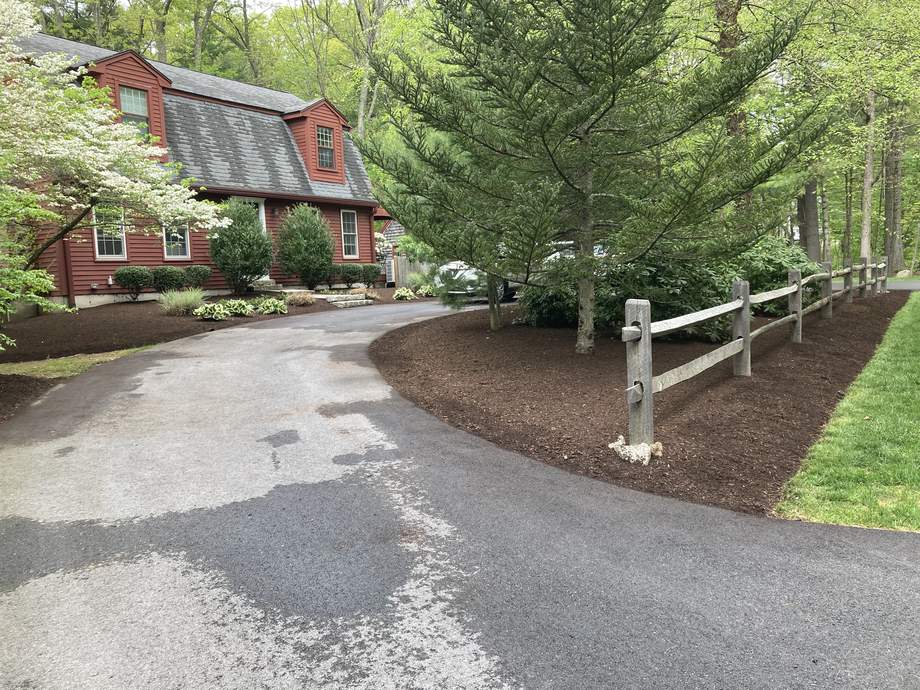
When to schedule spring clean-up in Norfolk County
Wrentham, Franklin and Foxboro sit in USDA zone 6a to 6b, and the last hard frost usually lands between May 1 and May 10. However, you do not need to wait for the last frost to clean up. You need to wait for the soil to dry out. Walking a crew and a wheelbarrow across a soggy lawn in March compacts the soil and tears out grass crowns. So the practical start date is when you can step on the lawn without leaving a footprint, usually the first week of April.
From there, the spring window runs about five weeks. Beds should be cleaned and edged before perennials push more than a few inches of growth. Crabgrass pre-emergent goes down when forsythia blooms, which is mid to late April here. Mulch goes on last, once the beds are clean and the soil has warmed. If you finish by Mother’s Day, you are in good shape.
Signs your yard is ready
- The lawn has firmed up and no longer squishes underfoot.
- Snow piles along the driveway have fully melted, including the shady north side.
- Daffodils and crocuses are up, and forsythia is starting to show yellow.
- Daytime highs are steadily in the 50s.
When to schedule fall clean-up in Norfolk County
The first frost in Wrentham typically arrives between October 10 and October 20. Leaf drop peaks from late October through mid November for maples, birches and ash. Oaks, which dominate wooded lots in Norfolk, Plainville and Foxboro, hold on until late November and sometimes into December. As a result, the fall clean-up window runs from about October 25 through the first week of December.
The goal is simple: get the leaves off the lawn before snow lands on them. Leaves that sit under snow all winter smother the grass and invite snow mold. In addition, the final mow, gutter cleaning and irrigation blow-out all need to happen before a hard freeze, which is usually around Thanksgiving. Most crews are fully booked by mid October, so call early. Our snow management customers often bundle fall clean-up with plow stakes in the same visit.
One pass or two?
On a lot with a few maples, one thorough pass in mid November is enough. On a wooded lot with mature oaks, two passes work far better. The first pass in early November clears the maples and keeps the lawn breathing. Then a second pass in late November or early December handles the oaks and whatever blew in from the neighbors. Two lighter passes usually cost less than one enormous one, because the crew moves faster and hauls less at a time.
What a proper spring and fall clean-up includes
A real clean-up is more than a leaf blower and a truck. Here is what you should expect from a full-service crew in spring:
- Removal of sticks, branches, leftover leaves and winter debris from lawn and beds.
- Raking out matted, winter-killed grass and any plow damage along the driveway.
- Cutting back ornamental grasses and any perennials left standing over winter.
- Pruning winter damage from shrubs and light shaping of hedges.
- Re-cutting a clean spade edge on every bed.
- First mow at a slightly lower height to remove dead tips.
- Dethatching or light raking if the thatch layer is over half an inch.
- Crabgrass pre-emergent and the first round of fertilizer.
- Fresh mulch, usually 2 to 3 inches, kept away from trunks and stems.
A fall clean-up covers a different list:
- Leaf removal from lawn, beds, patios, walkways and along fences, in one or two passes.
- Cutting back spent perennials while leaving some seed heads for birds.
- Final mow at a shorter height and a last edge along walks.
- Gutter and downspout cleaning once the trees are bare.
- Irrigation blow-out and shutting off outdoor spigots.
- Fall fertilizer to feed roots through winter.
- Wrapping or staking young evergreens on exposed corners.
- Hauling everything away or composting it on site.
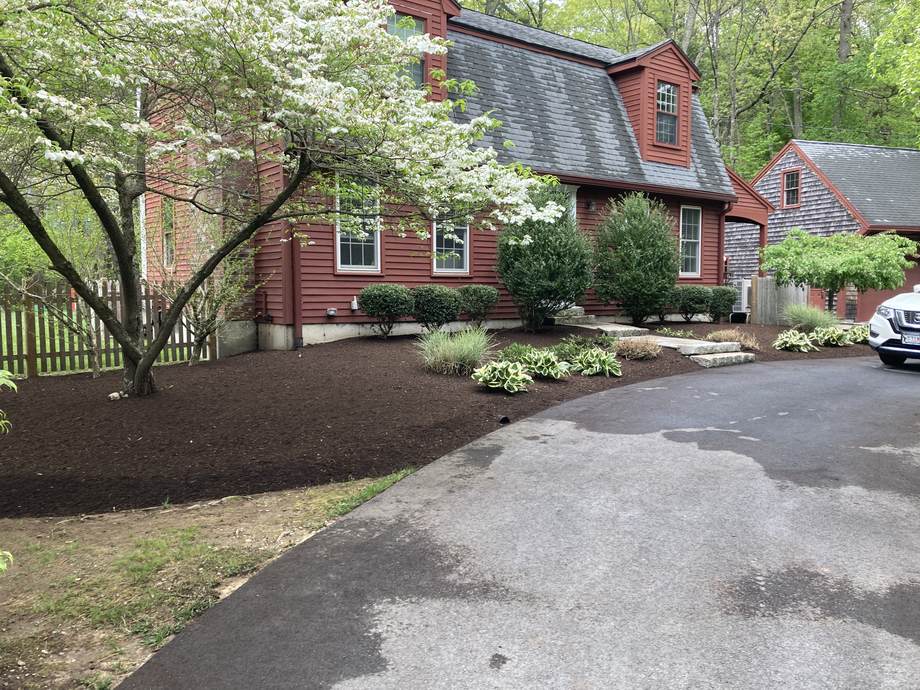
Leaf removal vs mulching leaves in place
You do not always have to haul leaves away. Mulch-mowing chops leaves into confetti that breaks down and feeds the lawn. It works well when the leaf layer is under an inch and the leaves are dry. Make two passes with a mulching blade and stop when you can still see grass through the pieces. Research from the UMass Extension landscape program and others shows mulched leaves do not harm turf or change soil pH in any meaningful way, even oak leaves.
However, mulch-mowing has limits. A wooded lot in Wrentham or Norfolk can drop three or four inches of oak leaves in a week. That volume clumps, mats and smothers grass. In that case, remove the bulk and mulch-mow only the last light layer. Mulched leaves also make excellent free mulch for beds at 2 to 3 inches deep. So a smart fall plan usually mixes both methods: haul the heavy stuff, chop the rest.
Bed edging, cutbacks and pruning
Bed edging is the single most visible part of any spring and fall clean-up. A crisp 3 to 4 inch spade edge makes even an ordinary yard look finished. Spring is the main edging season, because winter heaving softens last year’s line. A quick touch-up in fall keeps the edge sharp under the leaves. Our mulch and edging service handles both.
Cutbacks need a little judgment. Cut ornamental grasses in early spring, not fall, because the plumes protect the crown and look good in snow. Cut hostas, daylilies and peonies to the ground in fall once they yellow. Leave coneflowers and black-eyed Susans standing for the birds, then cut them in spring. Meanwhile, be careful with hydrangeas: panicle types like Limelight can be cut in spring, but the big blue mophead types bloom on old wood and should be left alone.
Pruning follows one rule: if it blooms in spring, prune it right after it blooms, never in a clean-up. That means lilac, forsythia, azalea and rhododendron stay untouched in April. Summer bloomers like spirea, rose of Sharon and potentilla can be shaped in early spring. For anything bigger than a hedge trimmer can handle, see our tree and shrub care page.
First and last mow heights
The first spring mow can go a notch lower than usual, around 2.5 inches, to clear dead tips and let sun reach the crown. After that, raise the deck to 3 to 3.5 inches for the rest of the season. Taller grass shades out crabgrass and holds up better in the July heat along the Route 1 corridor.
The last mow of the year should drop to 2 to 2.5 inches. Shorter grass going into winter resists snow mold and gives voles fewer places to hide. Time it after growth stops, usually mid to late November. If you plan to aerate and overseed, do it in September, well before the clean-up, so new grass has time to root. Our lawn mowing customers get the first and last cuts built into the schedule.
Gutters, drainage and water
Gutters are part of a proper fall clean-up because they fill with the same leaves. Clean them after the oaks drop, not before, or you will do it twice. Clogged gutters overflow at the foundation and feed the ice dams that plague Colonials and Capes across Franklin and Medway. In addition, make sure downspout extensions carry water at least 4 to 6 feet from the house.
Spring is the time to notice drainage problems, because the ground is saturated and every low spot shows. Look for standing water 24 hours after a rain, mushy corners near the driveway, and mulch that washes out of beds. Those are signs you may need a French drain, a dry well or regrading. Our drainage solutions team can fold that into a spring project.
Spring and fall clean-up pricing in the Wrentham area
Spring and fall clean-up pricing depends mostly on lot size, tree cover and how much has to be hauled. These are typical ranges for Wrentham, Norfolk, Franklin, Foxboro, Plainville, Medway and Bellingham, and every property is different.
| Property | Spring clean-up | Fall clean-up |
|---|---|---|
| Quarter-acre lot, few trees | $250 to $500 | $300 to $700 |
| Half-acre lot, moderate trees | $450 to $900 | $600 to $1,500 |
| Acre or more, heavily wooded | $800 to $1,800 | $1,200 to $3,500+ |
Fall usually costs more than spring because leaf volume drives labor and disposal. Most crews bill around $60 to $90 per person per hour, so a three-person crew for four hours lands near $800 to $1,000 plus dump fees of $50 to $150 per load. Add-ons carry their own prices: gutter cleaning runs $150 to $350, mulch runs $75 to $110 per yard installed, and core aeration runs $150 to $400.
What changes the price
- Oak canopy: oaks drop late and heavy, which often means a second pass.
- Fences, pools and beds: leaves collect in corners that a blower cannot clear quickly.
- Slopes and ledge: common in Wrentham and Plainville, and slow to work on.
- Disposal: on-site composting is cheaper than trucking to a transfer station.
- Timing: a December call after the leaves are wet and matted costs more than a booked November slot.
Mistakes to avoid
The biggest spring mistake is starting too early. Raking a wet lawn in March pulls up grass and compacts clay soil that takes all season to recover. The second is mowing too short in April, which invites crabgrass. Third, do not pile mulch against tree trunks or shrub stems. A mulch volcano rots bark and shortens the life of the plant.
In fall, the classic error is leaving leaves on the lawn until spring. By April they are a brown mat over dead grass. Another is cleaning gutters before the oaks drop. Also, avoid cutting back every perennial to bare soil, because some crowns need their own dead foliage for insulation. Finally, do not fertilize in late December on frozen ground. The nutrients run off into the storm drain instead of the roots.
DIY vs hiring a pro
A quarter-acre lot with a couple of maples is a reasonable weekend project. Plan on 4 to 8 hours for spring and 10 to 20 hours for fall spread over several weekends. You will want a backpack blower at $300 to $600, a tarp, a spade for edging and a way to haul leaves. Most towns in the area require a transfer station sticker and accept yard waste on set days, so check your town’s schedule first.
Hiring makes sense once the lot passes a half acre, the trees are mostly oak, or the property has a pool, fences and a lot of beds. It also makes sense when your November weekends are worth more than the invoice. A crew of three with commercial blowers and a leaf loader does in three hours what takes a homeowner three weekends. Instead of guessing, get a written estimate for a one-time spring and fall clean-up and compare it to your own time. Many customers roll it into a property maintenance plan that covers mowing, mulch and clean-ups on one schedule. You can see the full scope on our spring and fall clean-up service page.
Frequently asked questions
Should I leave the leaves for pollinators?
You can, in beds and along wood lines. Many native bees and butterflies overwinter in leaf litter. So keep a 2 to 3 inch layer in planting beds and under trees, but clear the lawn, walkways and drains.
When should I book a fall clean-up in Wrentham?
Book by early October for a November slot. Good crews fill their fall calendar fast, and late callers end up waiting until the leaves are wet and matted.
Is it too late for a clean-up in December?
No, as long as the ground is bare. A December clean-up is common on oak-heavy lots. However, once snow covers the lawn, the job waits until spring.
Do I still need a spring and fall clean-up if I have a mowing service?
Usually yes. Weekly mowing does not include bed work, cutbacks, edging, gutters or bulk leaf removal. Ask whether clean-ups are part of your contract or billed separately.
Can spring clean-up include lawn repair?
Yes. Spring is a good time to patch plow damage, rake out dead spots and top-dress bare areas. For larger repairs, ask about aeration and overseeding, which works best in early fall.
Book your spring and fall clean-up
Want your yard cleaned up on time, at the right height, with nothing skipped? Ten Four Landscape & Construction has handled spring and fall clean-up across Wrentham, Norfolk, Franklin, Foxboro, Plainville, Medway and Bellingham since 2012, with Seth on every job. Call (508) 505-5416 or request a free written estimate today.