Your yard floods because water arrives faster than the soil can absorb it and has nowhere else to go. In Wrentham and the rest of Norfolk County, the usual culprits are poor grading, dense clay soil, downspouts dumping at the foundation, and a high water table. To fix yard drainage, you first find where the water comes from, then give it a clear path away from the house using regrading, French drains, dry wells, or a combination.
Why yards flood in Norfolk County
Most of Wrentham, Norfolk, and Franklin sits on glacial till, a dense mix of clay, silt, and rock. Water moves through it slowly, so a heavy spring rain or a March snowmelt sits on top instead of soaking in. In addition, many neighborhoods were built on low fields where the water table sits just a few feet down.
The second factor is grading. Builders are supposed to slope the ground away from the house. However, foundation backfill settles over five to ten years, and the yard ends up tilting back toward the basement. Add a patio, a shed, or a neighbor’s new driveway, and the flow changes again.
The five most common causes
- Poor grading: the yard slopes toward the house or has a low bowl with no outlet.
- Clay soil: water cannot percolate, so it pools on the surface.
- Downspouts: gutters drop hundreds of gallons at the foundation during a single storm.
- Compacted lawn: years of mowing and foot traffic seal the top two inches.
- High water table: groundwater rises to the surface in spring and after big storms.
Most flooded yards have two or three of these at once. For example, a Foxboro lawn on clay with two downspouts pointed at a low corner is a classic case. Because the causes stack, the plan to fix yard drainage usually stacks too.
How to diagnose your yard drainage problem
Before you spend money to fix yard drainage, watch the water. Go outside during a steady rain and note where it flows, where it pools, and how long it takes to drain. Then check again 24 hours later. Puddles that vanish in a day point to compaction or grading. Puddles that last three or more days point to clay or a high water table.
A simple percolation test
Dig a hole 12 inches wide and deep in the wet area. Fill it with water, let it drain, and fill it again. Time how fast the second fill drops. Healthy loam drains an inch an hour or faster. Clay in Norfolk County often drains less than a quarter inch an hour. That number tells you whether a dry well will work or whether you must move water elsewhere.
Check the house first
Walk the foundation. The ground should drop at least six inches over the first ten feet. Note where every downspout ends. Next, look for stains or efflorescence on basement walls, which show where water is pushing in. Finally, note any spot where a neighbor’s yard, the street, or a driveway sends water onto your lot.
Solutions to fix yard drainage, from simple to major
Start with the cheapest fix that addresses the biggest cause. Often that is the downspouts. Then work up to grading and drains only if the problem remains. Below are the solutions we use most to fix yard drainage across Wrentham, Franklin, Norfolk, and Plainville.
Downspout extensions and buried leaders
A 1,000-square-foot roof section sheds about 600 gallons in a one-inch rain. If that lands at the foundation, no lawn can absorb it. Extending downspouts ten feet with above-ground pipe is the quick fix. The better fix is a buried 4-inch PVC leader that carries roof water 20 to 50 feet to a pop-up emitter, a dry well, or daylight at the edge of the lot.
Regrading and adding fill
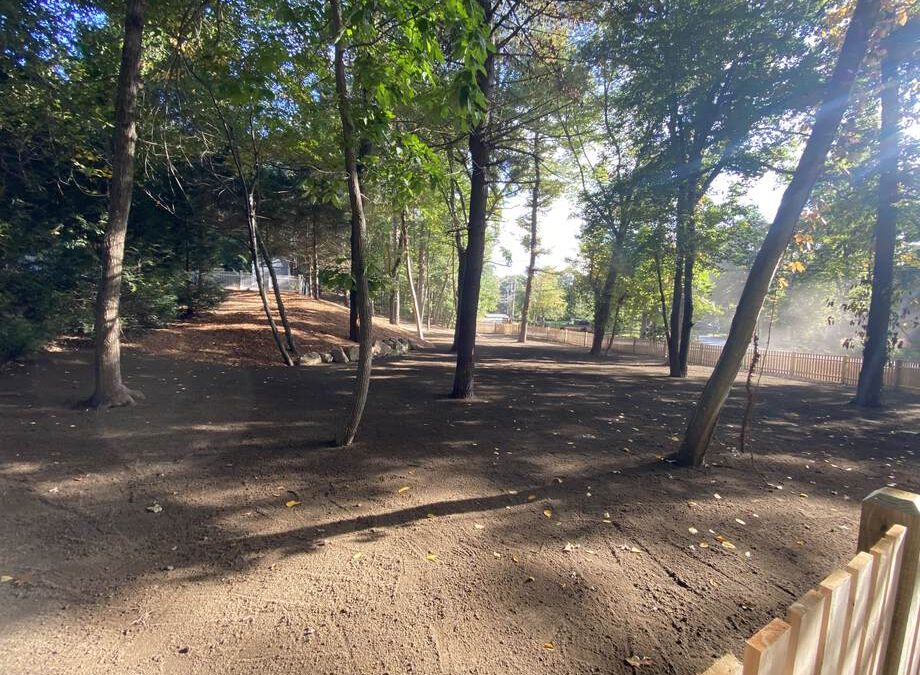
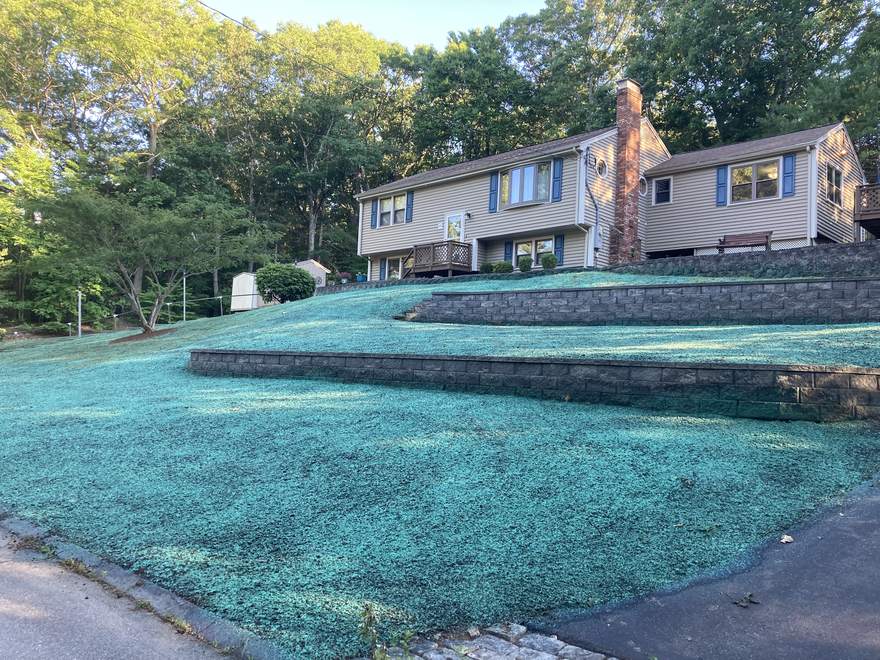
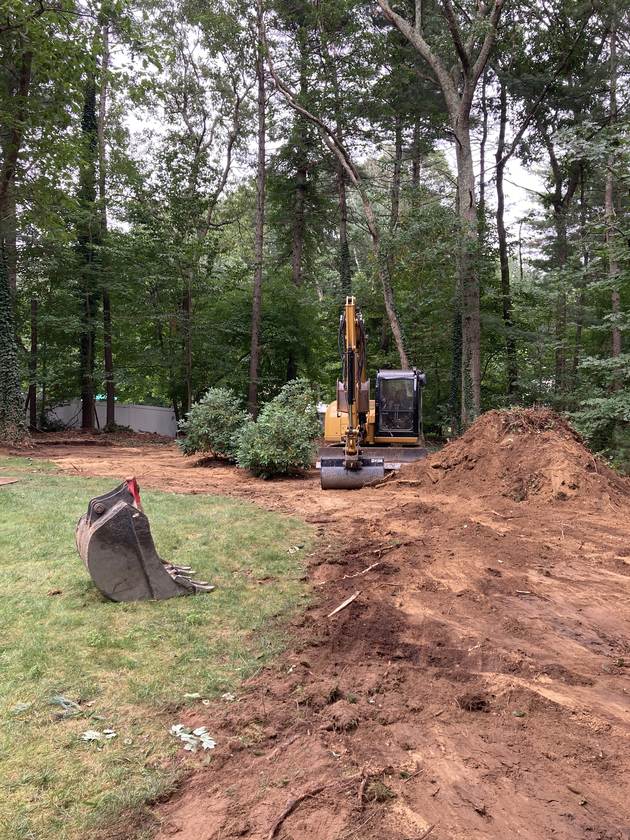
If the yard tilts toward the house, regrading is the honest fix. We strip the sod, bring in screened loam, and rebuild a slope of at least 2 percent away from the foundation. Low bowls in the middle of the lawn get filled and blended. Then we reseed or hydroseed. It is disruptive for a few weeks, but it solves the problem at its source. Our sitework crew handles grading with a skid steer and laser level so the slope is right.
French drains
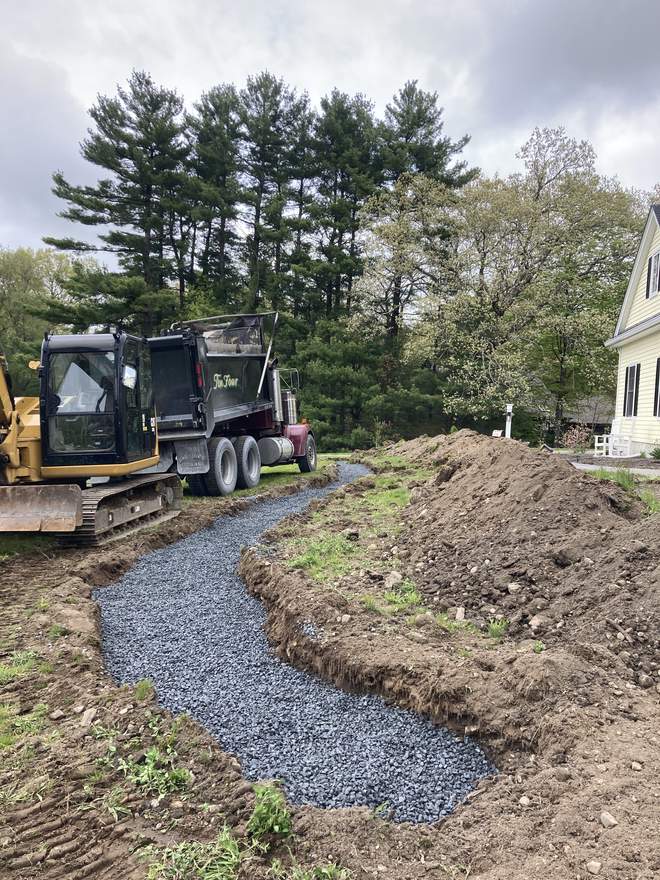
A French drain is a trench, usually 12 to 24 inches deep, lined with fabric, filled with crushed stone, and fitted with a perforated pipe. It intercepts water moving through the soil and carries it downhill. French drains are the workhorse for wet lawns on clay, soggy areas along a foundation, and water coming in from a neighbor’s yard. The key is that the pipe must have somewhere to go: a dry well, a catch basin, daylight, or a street drain where the town allows it.
Dry wells
A dry well is a buried pit filled with stone or a plastic chamber that holds water and lets it seep into the ground. Dry wells work well in sandy soil around Plainville and parts of Foxboro. They work poorly in tight clay, because the water just sits in the pit. So run the percolation test first. A dry well in soil that drains slower than a quarter inch an hour will overflow in every big storm.
Catch basins and channel drains
A catch basin is a grated box set at the lowest point of a lawn or patio. Water drops in and leaves through a buried pipe. Channel drains do the same job in a long slot across a driveway. Both are common where a patio or walkway has cut off the natural flow of water.
Swales and berms
A swale is a shallow, grassed ditch that carries water across a yard on the surface. It looks like a gentle dip in the lawn and mows normally. Swales are the cheapest way to move a lot of water on a large lot in Norfolk or Bellingham. A berm is the opposite: a low mound that blocks water. Together, they redirect runoff without any pipe.
Permeable pavers
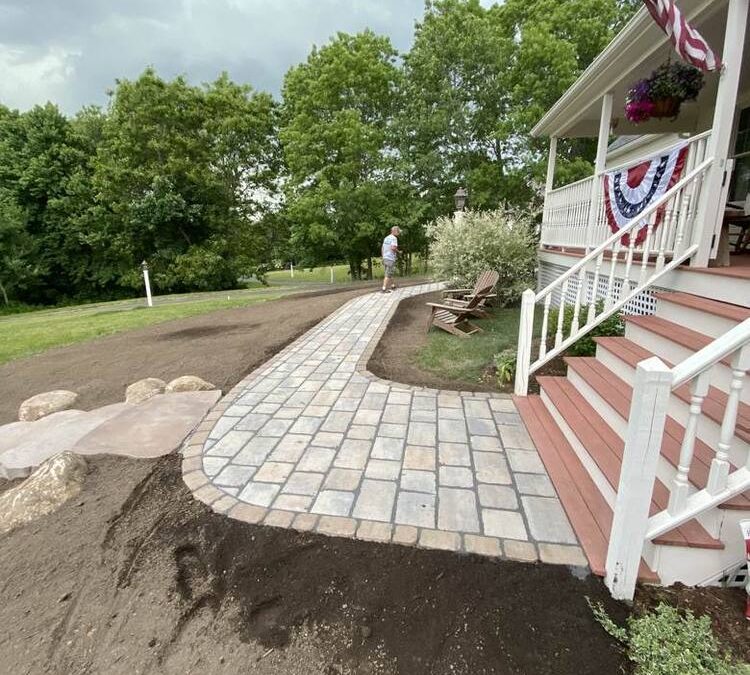
If a driveway or patio sheds water onto the lawn, permeable pavers let rain drain straight through the joints into a stone base below. They cost more than standard pavers, but they turn a hard surface into a sponge.
What it costs to fix yard drainage in Wrentham and Norfolk County
These are typical ranges for the Wrentham and Norfolk County area. Every site is different, and access, soil, and pipe length change the number. Ledge, which is common in Wrentham and Franklin, can add cost when a trench hits rock.
| Solution | Typical range |
|---|---|
| Downspout extensions (above ground) | $50 to $200 each |
| Buried downspout leader to pop-up emitter | $400 to $1,200 per run |
| Dry well (installed) | $1,200 to $3,500 |
| French drain | $30 to $75 per linear foot |
| Catch basin with piping | $1,000 to $3,000 |
| Grassed swale | $1,500 to $5,000 |
| Regrading (typical yard) | $2,500 to $8,000 |
| Permeable paver patio or driveway | $25 to $45 per sq ft |
Most residential drainage projects in our area land between $3,000 and $12,000 once you combine two or three solutions. In short, it is not cheap, but it beats a finished basement that floods twice. We give a free written estimate for every job through our water and drainage solutions service.
Wetlands and conservation rules in Massachusetts
Here is the part many homeowners miss. Under the Massachusetts Wetlands Protection Act, any work within 100 feet of a wetland, stream, or pond falls under the local conservation commission. Wrentham, Norfolk, Foxboro, and Franklin all have active commissions and local bylaws that can be stricter than the state rule. Digging a trench, adding fill, or piping water toward a wetland inside that buffer needs a filing first.
That matters because many of the wettest yards in Norfolk County sit near a wetland. If a cattail patch, vernal pool, or brook sits behind your lot, assume the buffer applies. The Mass.gov wetlands regulations guide explains the process. A simple project may only need a Request for Determination, which takes a few weeks. A larger one needs a Notice of Intent.
Also, you cannot pipe your runoff onto a neighbor’s property or into a town storm drain without permission. Most towns allow a connection to a street catch basin, but ask the DPW first. We handle this paperwork as part of the job, and we will tell you up front if a filing is required.
When flooding is a foundation issue, not a yard issue
Sometimes the yard is only the symptom. If water shows up in the basement when the yard looks dry, or if foundation cracks are wider than a quarter inch, you may have a structural or groundwater problem. Likewise, a sump pump that runs constantly in a dry week points to a high water table, not surface runoff.
In that case, yard drainage helps but will not solve it alone. Interior perimeter drains, a new sump system, or foundation waterproofing come from a basement contractor, not a landscaper. However, the two go together. Fixing the outside first often cuts basement water in half. We are honest about which side of the line a problem falls on.
Red flags that call for a foundation contractor
- Water entering through floor cracks or the wall-floor joint.
- Horizontal cracks or bowing in a block foundation wall.
- A sump pit that fills within minutes of being pumped.
- Water in the basement during winter thaws with no surface pooling outside.
Mistakes to avoid
We see the same errors on repeat calls across Medway, Bellingham, and Franklin. First, never install a dry well without testing the soil. Second, do not run a French drain with no outlet; a pipe that ends in clay becomes a buried bathtub. Third, avoid corrugated black pipe for downspouts, because it crushes, clogs with roots, and cannot be snaked. Use solid PVC instead.
Another common mistake is piling mulch against the house until the grade rises above the foundation line. Keep at least six inches between soil and siding. Finally, do not fill a low spot with topsoil alone. Water will find it again unless the whole slope is corrected.
DIY vs hiring a pro
Some ways to fix yard drainage are easy weekend projects. Downspout extensions, cleaning gutters, and core aerating a compacted lawn need no special skills. A short French drain on flat ground is doable if you rent a trencher and understand slope. Plan on a fall of at least one inch per ten feet of pipe, or the water will not move.
Hire a pro for regrading, anything within a wetland buffer, projects that need a permit or a DPW connection, and any trench deeper than 18 inches. Digging in Massachusetts also means calling Dig Safe at 811 first. Rocky till makes hand digging slow and often hides ledge that stops a rental trencher. Seth has been solving these problems in Norfolk County since 2001, and he is on every job.
Maintenance once the system is in
A drainage system is not set-and-forget. Clean gutters every spring and fall so roof water reaches the leaders. Flush buried downspout lines with a hose once a year and check that pop-up emitters open. Rake leaves off catch basin grates in October and November. Every few years, run a hose into the French drain inlet and confirm water exits at the outlet.
Keep the lawn healthy, too. Core aeration each fall keeps the surface open, and thick turf absorbs far more rain than thin turf. Our property maintenance plans include these checks so small clogs never become a flooded yard again.
Frequently asked questions
How long does it take to fix yard drainage?
Downspout and dry well work takes one to two days. A French drain or catch basin system takes two to four days. Full regrading with new lawn runs one to two weeks.
Will a French drain work in clay soil?
Yes, as long as it has an outlet. The drain collects water that would otherwise sit on the clay and carries it away. It does not rely on the clay absorbing anything, which is why it beats a dry well in tight soil.
Can I fix yard drainage by just adding topsoil?
Only if the low spot is small and the rest of the yard drains well. Otherwise, water finds the next low spot. Correcting the overall slope is what lasts.
Does core aeration help a flooded lawn?
It helps with puddles that clear in a day, because it opens the sealed surface. It does not help with a high water table or a yard sloping toward the house.
What time of year is best for drainage work?
Late spring through fall, when the ground is workable. Diagnose during spring melt, then dig and regrade in summer before fall seeding.
Get a free written estimate to fix yard drainage
If your yard turns into a pond every spring, we can find the cause and lay out the fix. Call Seth at (508) 505-5416 or request a free written estimate online. We serve Wrentham, Norfolk, Franklin, Foxboro, Plainville, Medway, and Bellingham.